
- News
- Business News
- Startups News
- 'Indian companies scale prematurely, so spend too much on marketing'
Trending
This story is from November 12, 2017
'Indian companies scale prematurely, so spend too much on marketing'
Lightspeed India Partners MD Bejul Somaia tells TOI why it’s a great time to invest in India
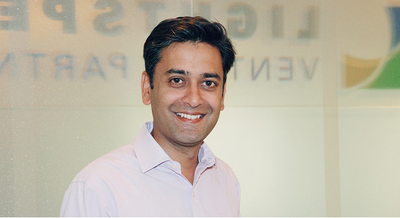
Bejul Somaia, managing director, Lightspeed India Partners
Bejul Somaia has spent over 20 years on both sides of the table — as entrepreneur and investor in the US and India. In his current role as managing director of Lightspeed India Partners, he’s making big bets on the country. The US venture capital firm, which launched a dedicated India fund of $135 million in 2015, has invested in companies such as Byju’s, Freshmenu and Sharechat.
What’s the difference you see in the startup ecosystem now compared to 10 years ago when you started investing in India?
The ecosystem is more mature now. The emergence of mobile internet makes this an exciting time to invest. In 2014 and 2015, there was a lot of capital flowing in and an exuberance around the internet. It has normalised now. While the early-stage deal quantity is down, quality has gone up, and quality is what matters. Today, there is a ready market for internet companies but the companies that started in 2012 or 2013 had to invest in creating the market, awareness and infrastructure. Today, companies can launch into an existing market. So naturally, we see capital-efficient companies. Today, we see a lot of diversity with startups emerging in healthcare, education, payments, lending, logistics and content, to name a few. The opportunities have broadened and diversified.
Do your investments reflect that diversity? Are you looking at new sectors?
You raised an India fund in the midst of a downturn...
As VCs, we are driven by opportunity. We raised our dedicated India fund in 2015 because we sensed that the opportunities were getting more interesting. We also see good exits. We were disciplined and measured when it came to investing in India. We are taking a step up, and accelerating our focus and investments. The bar for an early-stage startup to raise follow-on investment has gone up.
Why did you invest in Indian Energy Exchange, which recently had an IPO? It’s backed by large power companies and doesn’t seem like the kind of investment that a VC makes.
I wish we could do that every time. It is a successful investment. When we invested, it was a startup. When we met them eight years ago — we invested seven years ago — they were not making money. It had a concentrated marketplace model and there were a lot of questions. They roped in other power companies as shareholders, kudos to the original founders. They gave out 5% of the company. So they had access to the inventory. That helped aggregate suppliers around the platform. It was a strategic call.
Do you see more funds chasing fewer startups?
In 2006, a bunch of funds came in, and many ended up not being serious and leaving. The number of firms in the market hasn’t gone up in the last six years. It has come down, while the opportunity has increased. In 2014, hot money came in from other markets, hedge-funds, even that has gone down. It is far more disciplined now.
What are the challenges startups face in India and how different are these from challenges in the US?
Fundamentally, young companies need to do the same thing regardless of the market. They need to look at market opportunity. Building leadership teams in India is more difficult. A lot of entrepreneurs are first-time entrepreneurs, who haven’t built teams before. The other thing is that companies tend to scale out prematurely in India. They need to have a strong product-market fit before scaling. I think that’s problematic. If the value proposition is not great, then you have to spend a lot on marketing.
It was an early investor in online hotel network Oyo, which went on to bag $450 million in funding. This year, one of its earliest portfolio companies, Indian Energy Exchange went public, and Lightspeed opened its second India office in Bengaluru. Somaia tells TOI why it’s a great time to invest in India.
What’s the difference you see in the startup ecosystem now compared to 10 years ago when you started investing in India?
The ecosystem is more mature now. The emergence of mobile internet makes this an exciting time to invest. In 2014 and 2015, there was a lot of capital flowing in and an exuberance around the internet. It has normalised now. While the early-stage deal quantity is down, quality has gone up, and quality is what matters. Today, there is a ready market for internet companies but the companies that started in 2012 or 2013 had to invest in creating the market, awareness and infrastructure. Today, companies can launch into an existing market. So naturally, we see capital-efficient companies. Today, we see a lot of diversity with startups emerging in healthcare, education, payments, lending, logistics and content, to name a few. The opportunities have broadened and diversified.
Do your investments reflect that diversity? Are you looking at new sectors?
We have invested in edtech, vernacular social networks — which you didn’t see four years ago — consumer fintech, online to offline, mobile consumer, India-focused SaaS, B2B commerce. More recently, we invested in SME lending and logistics. So it has been quite diverse.
You raised an India fund in the midst of a downturn...
As VCs, we are driven by opportunity. We raised our dedicated India fund in 2015 because we sensed that the opportunities were getting more interesting. We also see good exits. We were disciplined and measured when it came to investing in India. We are taking a step up, and accelerating our focus and investments. The bar for an early-stage startup to raise follow-on investment has gone up.
Why did you invest in Indian Energy Exchange, which recently had an IPO? It’s backed by large power companies and doesn’t seem like the kind of investment that a VC makes.
I wish we could do that every time. It is a successful investment. When we invested, it was a startup. When we met them eight years ago — we invested seven years ago — they were not making money. It had a concentrated marketplace model and there were a lot of questions. They roped in other power companies as shareholders, kudos to the original founders. They gave out 5% of the company. So they had access to the inventory. That helped aggregate suppliers around the platform. It was a strategic call.
Do you see more funds chasing fewer startups?
In 2006, a bunch of funds came in, and many ended up not being serious and leaving. The number of firms in the market hasn’t gone up in the last six years. It has come down, while the opportunity has increased. In 2014, hot money came in from other markets, hedge-funds, even that has gone down. It is far more disciplined now.
What are the challenges startups face in India and how different are these from challenges in the US?
Fundamentally, young companies need to do the same thing regardless of the market. They need to look at market opportunity. Building leadership teams in India is more difficult. A lot of entrepreneurs are first-time entrepreneurs, who haven’t built teams before. The other thing is that companies tend to scale out prematurely in India. They need to have a strong product-market fit before scaling. I think that’s problematic. If the value proposition is not great, then you have to spend a lot on marketing.
End of Article
FOLLOW US ON SOCIAL MEDIA










Hot Picks
TOP TRENDING
Trending Stories
In Business
Entire Website
- Will banks open only for 5 days a week? Here’s what you should know about IBA’s proposal
- India set to be third largest economy, says S&P Global
- Dalal Street bull run continues! BSE Sensex crosses 69,000 for the first time; Nifty above 20,800
- Byju’s reduces notice period for employees as troubles mount
- Sensex surges over 900 points, Nifty above 20,550 as BJP state election wins bolster Modi's Lok Sabha 2024 prospects
- UltraTech to buy building materials business of Kesoram in 7,600 crore deal
- Tata Technologies stock debuts at a bumper 140% premium; share price at Rs 1200 on BSE
- Tata Technologies share allotment: How to check IPO allotment status, listing date, GMP
- BSE m-cap rides rally in Adani stocks, tops $4 trillion
- Charlie Munger, who helped Warren Buffett build Berkshire, dies at 99
- 'Came to meet as your didi': Mamata on 'last attempt' to resolve doctors crisis
- Fugitive Zakir Naik misleads Muslims on Waqf bill. Minister hits back
- Did doctors make a mistake in making Mamata wait for two hours?
- 'Water reached tomb of Shahjahan': After heavy rain, leakage at Taj Mahal
- Diljit Dosanjh cryptically reacts to sarcastic video on his expensive concert tickets
- 'If Iyer is thinking he is similar to Kohli...': Basit Ali
- How Yechury went from Indira’s tormentor to Rahul’s mentor
- Noida woman loses Rs 27 lakh in SIM card 'hacking': Big mistake she made
- 'My father smeared Tiger's blood on my lips': Yograj
- 'Gyanvapi not mosque, but Vishwanath himself': UP CM Yogi Adityanath



Popular Categories
Hot on the Web
Top Trends
Trending Topics
Korean TeaSector 36 ReviewGreen Apple BenefitsPriyanka Chopra TattooKottukkaali OTT ReleaseNational Parks In IndiaGhaziabad Juice SellerGOAT CollectionSudha MurtyMalayalam ProducersIndia's Best Dancer 4Simi GarewalDilli BabuIndian National ParksLaung BenefitsVikas SethiApple iPhone 16Donald TrumpAadhar Card Update By Sept 14Wordle Answer
Living and entertainment
Latest News
Kaun Banega Crorepati 16: Can you guess the answer for this Rs 3,20,000 question on Navy, which contestant Naman Jain incorrectly answered?Edible oil import duty hiked by 20%'Calling all Swifties for Trump': Donald's new campaign merch imitates Eras Tour shirtsWWE Hall of Famer Watches 15 Hours Of Wrestling Each WeekDallas Cowboys Set to Defend AT&T Stadium in Week 2 Clash with New Orleans SaintsTovino on training for Kalaripayattu in ‘ARM’: I practiced every single day, even if I had a hectic day on set8 animals that reproduce without matingDelhi Police Files FIR for Firecracker Celebration Outside CM Kejriwal's ResidenceThrowback: When Alia Bhatt responded to insecurity questions about Ranbir Kapoor, shut down gossipIndia's T20I captain Suryakumar Yadav turns 34: A glimpse into his stellar T20 career'Forgive me, I don't belong ...' : Tamil Nadu hotelier's apology to FM Nirmala Sitharaman over GST remark triggers political rowRakul Preet Singh reveals Bollywood stylists charge from Rs 15000 to Rs 1 lakh for one event, one outfit: 'Living in Mumbai requires a lot of PR'September 14, 2024: Flying creatures and how their wings workThrashed for 'molesting' kid on train, rail staffer diesKejriwal walks out of jail, says morale is up by 100 timesDhruv Kapila's health setback shatters Indian pair's Vietnam Open semifinal hopesFormer Titans Cheerleader Danielle Sekelsky Begins WWE NXT Training"Birthday aapka hug aur paari I am getting...": Tahira Kashyap pens adorable b'day wish for hubby Ayushmann Khurrana
Copyright © 2024 Bennett, Coleman & Co. Ltd. All rights reserved. For reprint rights: Times Syndication Service